
- Học kỳ
- SP2026
- Thời Gian
- 4/5/26
- Loại tài liệu
- FE
HRM202c SP26 FE RE
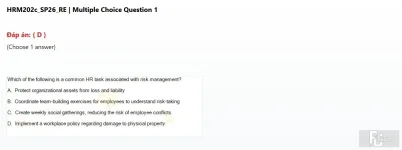
Question 1
(Choose 1 answer)
Which of the following is a common HR task associated with risk management?
A. Protect organizational assets from loss and liability
B. Coordinate team-building exercises for employees to understand risk-taking
C. Create weekly social gatherings, reducing the risk of employee conflicts
D. Implement a workplace policy regarding damage to physical property
Question 2
(Choose 1 answer)
What are the types of patents that grant rights to an individual or organization?
A. Utility, design, and plant patents
B. International, regional, and local patents
C. Technical, artistic, and literary patents
D. Temporary, illegal, and permanent patents
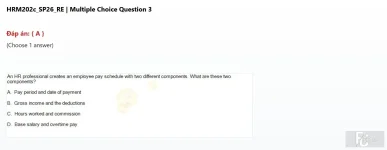
Question 3
(Choose 1 answer)
An HR professional creates an employee pay schedule with two different components. What are these two components?
A. Pay period and date of payment
B. Gross income and the deductions
C. Hours worked and commission
D. Base salary and overtime pay
Question 4
(Choose 1 answer)
What is the first phase of career development?
A. Assessment
B. Preparation
C. Investigation
D. Commitment
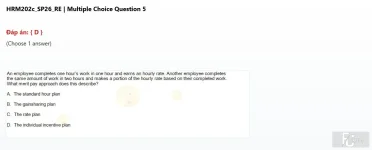
Question 5
(Choose 1 answer)
An employee completes one hour's work in one hour and earns an hourly rate. Another employee completes the same amount of work in two hours and makes a portion of the hourly rate based on their completed work. What merit pay approach does this describe?
A. The standard hour plan
B. The gainsharing plan
C. The rate plan
D. The individual incentive plan
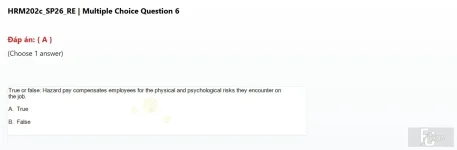
Question 6
(Choose 1 answer)
True or false. Hazard pay compensates employees for the physical and psychological risks they encounter on the job.
A. True
B. False
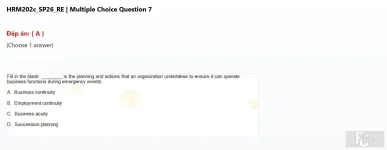
Question 7
(Choose 1 answer)
Fill in the blank: _________ is the planning and actions that an organization undertakes to ensure it can operate business functions during emergency events.
A. Business continuity
B. Employment continuity
C. Business acuity
D. Succession planning
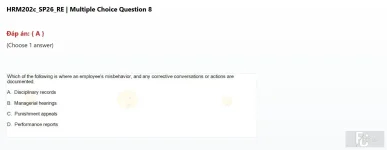
Question 8
(Choose 1 answer)
Which of the following is where an employee's misbehavior, and any corrective conversations or actions are documented.
A. Disciplinary records
B. Managerial hearings
C. Punishment appeals
D. Performance reports
Question 9
(Choose 3 answers)
Which of the following are types of compliance training? Select all that apply.
A. Anti-harassment and discrimination training
B. Information security training
C. Health and safety training
D. Customer service training
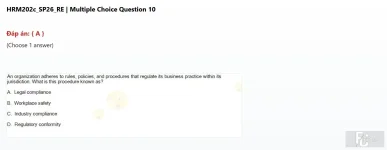
Question 10
(Choose 1 answer)
An organization adheres to rules, policies, and procedures that regulate its business practice within its jurisdiction. What is this procedure known as?
A. Legal compliance
B. Workplace safety
C. Industry compliance
D. Regulatory conformity
Question 11
(Choose 2 answers)
What types of biases exist in the hiring process? Select two that apply.
A. Explicit bias
B. Unconscious bias
C. Direct bias
D. Halo bias
Question 12
(Choose 1 answer)
When defining HR goals, which of the following is most important to remember?
A. HR goals should align with the overall organizational goals
B. HR goals should focus on reducing the number of employees
C. HR goals should align with the organization's marketing goals
D. HR goals should prioritize gender equality above all else
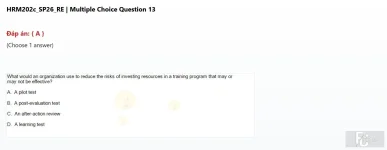
Question 13
(Choose 1 answer)
What would an organization use to reduce the risks of investing resources in a training program that may or may not be effective?
A. A pilot test
B. A post-evaluation test
C. An after-action review
D. A learning test
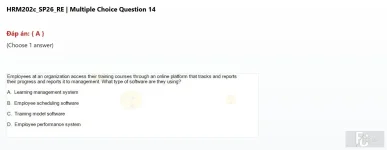
Question 14
(Choose 1 answer)
Employees at an organization access their training courses through an online platform that tracks and reports their progress and reports it to management. What type of software are they using?
A. Learning management system
B. Employee scheduling software
C. Training model software
D. Employee performance system
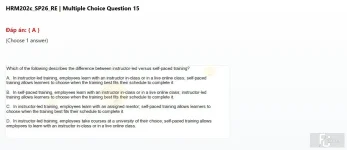
Question 15
(Choose 1 answer)
Which of the following describes the difference between instructor-led versus self-paced training?
A. In instructor-led training, employees learn with an instructor in-class or in a live online class; self-paced training allows learners to choose when the training best fits their schedule to complete it
B. In self-paced training, employees learn with an instructor in-class or in a live online class; instructor-led training allows learners to choose when the training best fits their schedule to complete it.
C. In instructor-led training, employees learn with an assigned mentor; self-paced training allows learners to choose when the training best fits their schedule to complete it.
D. In instructor-led training, employees take courses at a university of their choice, self-paced training allows employees to learn with an instructor in-class or in a live online class
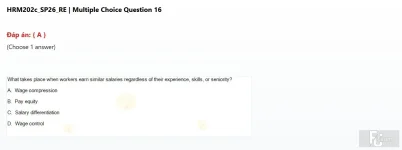
Question 16
(Choose 1 answer)
What takes place when workers earn similar salaries regardless of their experience, skills, or seniority?
A. Wage compression
B. Pay equity
C. Salary differentiation
D. Wage control
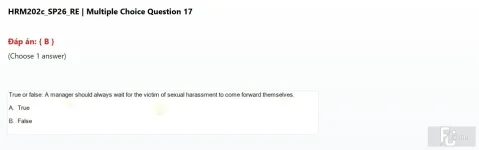
Question 17
(Choose 1 answer)
True or false: A manager should always wait for the victim of sexual harassment to come forward themselves.
A. True
B. False
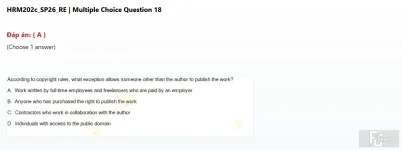
Question 18
(Choose 1 answer)
According to copyright rules, what exception allows someone other than the author to publish the work?
A. Work written by full-time employees and freelancers who are paid by an employer
B. Anyone who has purchased the right to publish the work
C. Contractors who work in collaboration with the author
D. Individuals with access to the public domain
Question 19
(Choose 1 answer)
What best practices is one of the first things you can do to foster an inclusive workplace culture?
A. Detail the current culture
B. Implement a top-down decision-making process
C. Focus on individual achievements
D. Encourage a competitive culture
Question 20
(Choose 1 answer)
True or false: One of the cons of self-paced training is that it is repeatable.
A. True
B. False
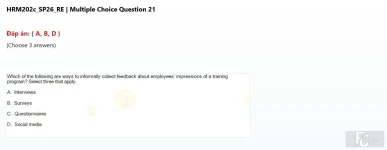
Question 21
(Choose 3 answers)
Which of the following are ways to informally collect feedback about employees impressions of a training program? Select three that apply.
A. Interviews
B. Surveys
C. Questionnaires
D. Social media
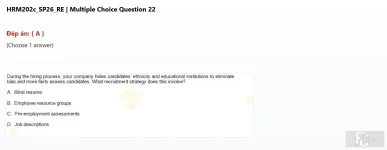
Question 22
(Choose 1 answer)
During the hiring process, your company hides candidates ethnicity and educational institutions to eliminate bias and more fairly assess candidates. What recruitment strategy does this involve?
A. Blind resume
B. Employee resource groups
C. Pre-employment assessments
D. Job descriptions
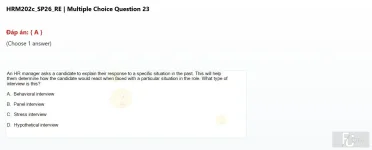
Question 23
(Choose 1 answer)
An HR manager asks a candidate to explain their response to a specific situation in the past. This will help them determine how the candidate would react when faced with a particular situation in the role. What type of interview is this?
A. Behavioral interview
B. Panel interview
C. Stress interview
D. Hypothetical interview
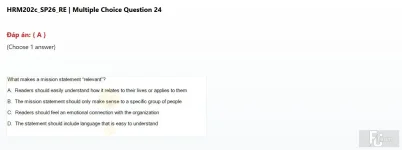
Question 24
(Choose 1 answer)
What makes a mission statement "relevant"?
A. Readers should easily understand how it relates to their lives or applies to them
B. The mission statement should only make sense to a specific group of people
C. Readers should feel an emotional connection with the organization
D. The statement should include language that is easy to understand
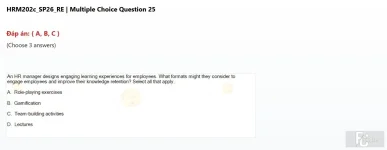
Question 25
(Choose 3 answers)
An HR manager designs engaging learning experiences for employees. What formats might they consider to engage employees and improve their knowledge retention? Select all that apply.
A. Role-playing exercises
B. Gamification
C. Team-building activities
D. Lectures
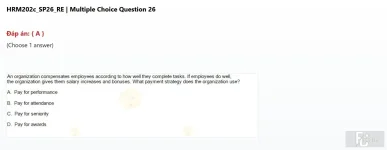
Question 26
(Choose 1 answer)
An organization compensates employees according to how well they complete tasks. If employees do well the organization gives them salary increases and bonuses. What payment strategy does the organization use?
A. Pay for performance
B. Pay for attendance
C. Pay for seniority
D. Pay for awards
Question 27
(Choose 1 answer)
What is the agreed upon compensation given to an employee when they join a company?
A. Base pay
B. Bonus pay
C. Joining fee
D. New hire pay
Question 28
(Choose 1 answer)
What is the last phase of career development?
A. Transition
B. Retention
C. Exploration
D. Satisfaction
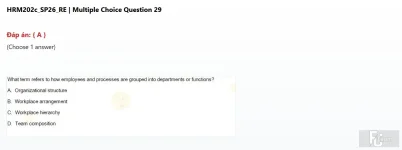
Question 29
(Choose 1 answer)
What term refers to how employees and processes are grouped into departments or functions?
A. Organizational structure
B. Workplace arrangement
C. Workplace hierarchy
D. Team composition
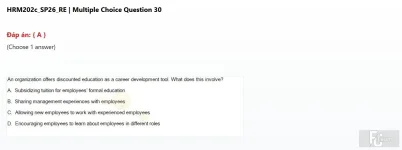
Question 30
(Choose 1 answer)
An organization offers discounted education as a career development tool. What does this involve?
A. Subsidizing tuition for employees formal education
B. Sharing management experiences with employees
C. Allowing new employees to work with experienced employees
D. Encouraging employees to learn about employees in different roles
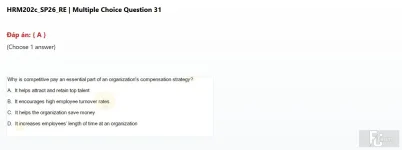
Question 31
(Choose 1 answer)
Why is competitive pay an essential part of an organization's compensation strategy?
A. It helps attract and retain top talent
B. It encourages high employee turnover rates
C. It helps the organization save money
D. It increases employees' length of time at an organization
Question 32
(Choose 3 answers)
Which of the following should be included in an employee handbook? Select three that apply.
A. Detailed compensation policies
B. Overview of benefits
C. Work holidays and time off
D. Employee contracts
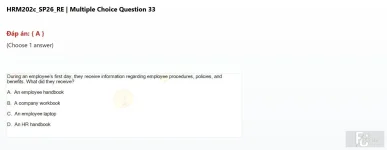
Question 33
(Choose 1 answer)
During an employee's first day, they receive information regarding employee procedures, policies, and benefits. What did they receive?
A. An employee handbook
B. A company workbook
C. An employee laptop
D. An HR handbook
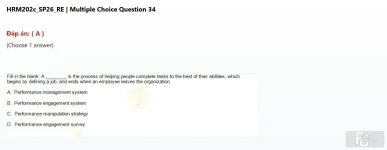
Question 34
(Choose 1 answer)
Fill in the blank: A ________ is the process of helping people complete tasks to the best of their abilities, which begins by defining a job, and ends when an employee leaves the organization.
A. Performance management system
B. Performance engagement system
C. Performance manipulation strategy
D. Performance engagement survey
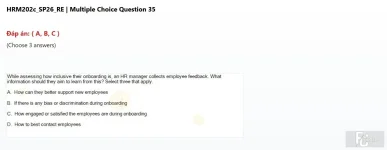
Question 35
(Choose 3 answers)
While assessing how inclusive their onboarding is, an HR manager collects employee feedback. What information should they aim to learn from this? Select three that apply.
A. How can they better support new employees
B. If there is any bias or discrimination during onboarding
C. How engaged or satisfied the employees are during onboarding
D. How to best contact employees
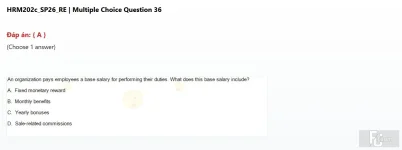
Question 36
(Choose 1 answer)
An organization pays employees a base salary for performing their duties. What does this base salary include?
A. Fixed monetary reward
B. Monthly benefits
C. Yearly bonuses
D. Sale-related commissions
Question 37
(Choose 1 answer)
What type of interview uses open-ended questions to allow employees to provide in-depth responses?
A. An unstructured interview
B. A basic interview
C. A structured interview
D. A Questionnaire interview
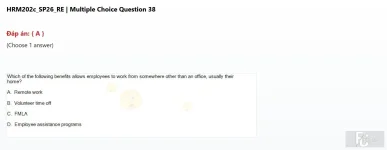
Question 38
(Choose 1 answer)
Which of the following benefits allows employees to work from somewhere other than an office, usually their home?
A. Remote work
B. Volunteer time off
C. FMLA
D. Employee assistance programs
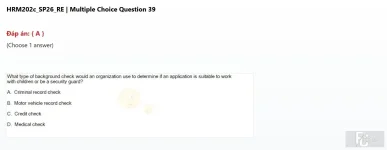
Question 39
(Choose 1 answer)
What type of background check would an organization use to determine if an application is suitable to work with children or be a security guard?
A. Criminal record check
B. Motor vehicle record check
C. Credit check
D. Medical check
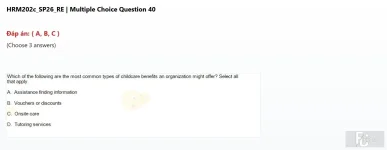
Question 40
(Choose 3 answers)
Which of the following are the most common types of childcare benefits an organization might offer? Select all that apply.
A. Assistance finding information
B. Vouchers or discounts
C. Onsite care
D. Tutoring services
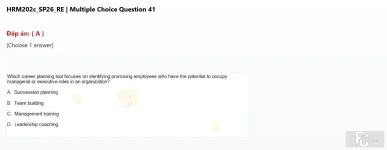
Question 41
(Choose 1 answer)
Which career planning tool focuses on identifying promising employees who have the potential to occupy managerial or executive roles in an organization?
A. Succession planning
B. Team building
C. Management training
D. Leadership coaching
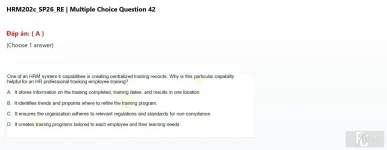
Question 42
(Choose 1 answer)
One of an HRM system's capabilities is creating centralized training records. Why is this particular capability helpful for an HR professional tracking employee training?
A. It stores information on the training completed, training dates, and results in one location
B. It identifies trends and pinpoints where to refine the training program.
C. It ensures the organization adheres to relevant regulations and standards for non-compliance
D. It creates training programs tailored to each employee and their learning needs
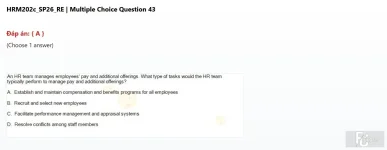
Question 43
(Choose 1 answer)
An HR team manages employees' pay and additional offerings. What type of tasks would the HR team typically perform to manage pay and additional offerings?
A. Establish and maintain compensation and benefits programs for all employees
B. Recruit and select new employees
C. Facilitate performance management and appraisal systems
D. Resolve conflicts among staff members
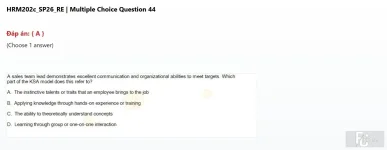
Question 44
(Choose 1 answer)
A sales team lead demonstrates excellent communication and organizational abilities to meet targets. Which part of the KSA model does this refer to?
A. The instinctive talents or traits that an employee brings to the job
B. Applying knowledge through hands-on experience or training
C. The ability to theoretically understand concepts
D. Learning through group or one-on-one interaction
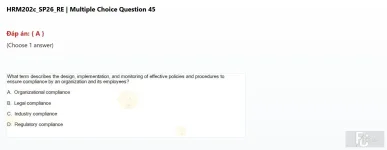
Question 45
(Choose 1 answer)
What term describes the design, implementation, and monitoring of effective policies and procedures to ensure compliance by an organization and its employees?
A. Organizational compliance
B. Legal compliance
C. Industry compliance
D. Regulatory compliance
Question 46
(Choose 1 answer)
Why would a leadership team issue a values, or corporate values statement?
A. It informs employees how to conduct business within the organization
B. It helps maximize profits and shareholder value
C. It ensures the organization complies with government regulations
D. It provides a legal framework for the organization's operations
Question 47
(Choose 1 answer)
What does a compa ratio higher or lower than 100% indicate?
A. That an employee is either overpaid or underpaid
B. That the salary data that has been collected is flawed.
C. That an employee is receiving the maximum or minimum salary range
D. That employees have not been honest when completing salary surveys.
Question 48
(Choose 1 answer)
In addition to mergers and acquisitions, which of the following is an example of organization restructuring?
A. Startups
B. Downsizing
C. Conducting interviews
D. Hiring contract workers
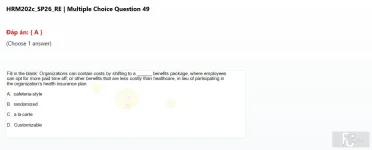
Question 49
(Choose 1 answer)
Fill in the blank: Organizations can contain costs by shifting to a ________ benefits package, where employees can opt for more paid time off, or other benefits that are less costly than healthcare, in lieu of participating in the organization's health insurance plan.
A. cafeteria-style
B. randomized
C. a la carte
D. Customizable
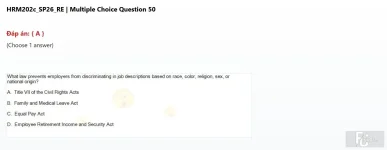
Question 50
(Choose 1 answer)
What law prevents employers from discriminating in job descriptions based on race, color, religion, sex, or national origin?
A. Title VII of the Civil Rights Acts
B. Family and Medical Leave Act
C. Equal Pay Act
D. Employee Retirement Income and Security Act
Đính kèm
-
 HRM202c SP26 FE RE_001.webp30.5 KB · Lượt xem: 3
 -
 HRM202c SP26 FE RE_002.webp24 KB · Lượt xem: 3
 -
 HRM202c SP26 FE RE_003.webp24.9 KB · Lượt xem: 0
 -
 HRM202c SP26 FE RE_004.webp16.8 KB · Lượt xem: 0
 -
 HRM202c SP26 FE RE_005.webp30.1 KB · Lượt xem: 0
 -
 HRM202c SP26 FE RE_006.webp17.8 KB · Lượt xem: 0
 -
 HRM202c SP26 FE RE_007.webp23.6 KB · Lượt xem: 0
 -
 HRM202c SP26 FE RE_008.webp22.6 KB · Lượt xem: 0
 -
 HRM202c SP26 FE RE_009.webp23.1 KB · Lượt xem: 0
 -
 HRM202c SP26 FE RE_010.webp24 KB · Lượt xem: 0
 -
 HRM202c SP26 FE RE_011.webp18.5 KB · Lượt xem: 0
 -
 HRM202c SP26 FE RE_012.webp28.8 KB · Lượt xem: 0
 -
 HRM202c SP26 FE RE_013.webp22.3 KB · Lượt xem: 0
 -
 HRM202c SP26 FE RE_014.webp28.2 KB · Lượt xem: 0
 -
 HRM202c SP26 FE RE_015.webp56.5 KB · Lượt xem: 0
 -
 HRM202c SP26 FE RE_016.webp21 KB · Lượt xem: 0
 -
 HRM202c SP26 FE RE_017.webp17.4 KB · Lượt xem: 0
 -
 HRM202c SP26 FE RE_018.webp29.9 KB · Lượt xem: 0
 -
 HRM202c SP26 FE RE_019.webp24.3 KB · Lượt xem: 0
 -
 HRM202c SP26 FE RE_020.webp15.4 KB · Lượt xem: 0
 -
 HRM202c SP26 FE RE_021.webp22.5 KB · Lượt xem: 0
 -
 HRM202c SP26 FE RE_022.webp26.9 KB · Lượt xem: 0
 -
 HRM202c SP26 FE RE_023.webp28.7 KB · Lượt xem: 0
 -
 HRM202c SP26 FE RE_024.webp29.4 KB · Lượt xem: 0
 -
 HRM202c SP26 FE RE_025.webp26.3 KB · Lượt xem: 0
 -
 HRM202c SP26 FE RE_026.webp27.2 KB · Lượt xem: 0
 -
 HRM202c SP26 FE RE_027.webp18.9 KB · Lượt xem: 0
 -
 HRM202c SP26 FE RE_028.webp16.7 KB · Lượt xem: 0
 -
 HRM202c SP26 FE RE_029.webp21.7 KB · Lượt xem: 0
 -
 HRM202c SP26 FE RE_030.webp29.6 KB · Lượt xem: 0
 -
 HRM202c SP26 FE RE_031.webp25.5 KB · Lượt xem: 0
 -
 HRM202c SP26 FE RE_032.webp23 KB · Lượt xem: 0
 -
 HRM202c SP26 FE RE_033.webp23.6 KB · Lượt xem: 0
 -
 HRM202c SP26 FE RE_034.webp28.7 KB · Lượt xem: 0
 -
 HRM202c SP26 FE RE_035.webp32.3 KB · Lượt xem: 0
 -
 HRM202c SP26 FE RE_036.webp22.3 KB · Lượt xem: 0
 -
 HRM202c SP26 FE RE_037.webp22.2 KB · Lượt xem: 0
 -
 HRM202c SP26 FE RE_038.webp21.9 KB · Lượt xem: 0
 -
 HRM202c SP26 FE RE_039.webp23.7 KB · Lượt xem: 0
 -
 HRM202c SP26 FE RE_040.webp23.4 KB · Lượt xem: 0
 -
 HRM202c SP26 FE RE_041.webp24.4 KB · Lượt xem: 0
 -
 HRM202c SP26 FE RE_042.webp38.2 KB · Lượt xem: 0
 -
 HRM202c SP26 FE RE_043.webp31.9 KB · Lượt xem: 0
 -
 HRM202c SP26 FE RE_044.webp31.8 KB · Lượt xem: 0
 -
 HRM202c SP26 FE RE_045.webp25.3 KB · Lượt xem: 0
 -
 HRM202c SP26 FE RE_046.webp28.8 KB · Lượt xem: 0
 -
 HRM202c SP26 FE RE_047.webp28 KB · Lượt xem: 0
 -
 HRM202c SP26 FE RE_048.webp21.2 KB · Lượt xem: 0
 -
 HRM202c SP26 FE RE_049.webp28 KB · Lượt xem: 0
 -
 HRM202c SP26 FE RE_050.webp24.9 KB · Lượt xem: 3